
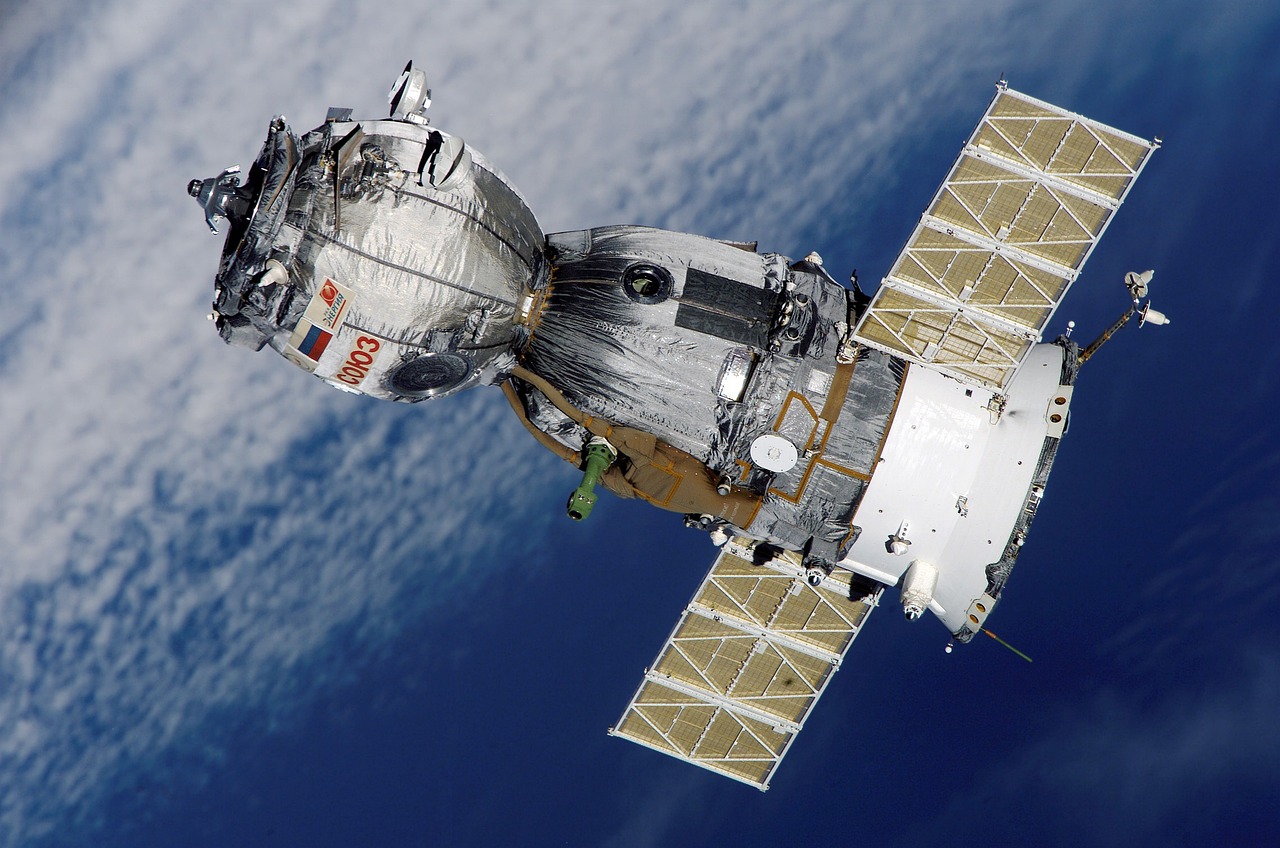
The Shenzhou-21 manned spacecraft successfully docked with the China Space Station (CSS) complex and its crew entered the orbital outpost, completing a “space rendezvous” with the Shenzhou-20 crew, marking a pivotal moment in China’s ambitious space program.
Shenzhou-21 Successfully Docks and Crew Enters Space Station
At precisely 3:22 AM Beijing time on November 1, 2025, the Shenzhou-21 manned spacecraft achieved autonomous rapid rendezvous and docking with the China Space Station complex. This critical maneuver, executed with precision, paved the way for the new crew to enter the station and begin their mission.
Just over an hour later, at 4:58 AM Beijing time, the Shenzhou-21 astronaut crew successfully entered the China Space Station. This entry culminated in a highly anticipated “space rendezvous” with the incumbent Shenzhou-20 astronaut crew, a moment symbolizing the seamless continuity of human presence in China’s orbital laboratory. The China Manned Space Engineering Office (CMSEO) officially announced these milestones from Beijing on November 1, providing the public with the latest updates on the nation’s space endeavors.
The autonomous rapid rendezvous and docking procedure represents a significant technological advancement. This sophisticated technique allows spacecraft to dock with an orbiting station within a few hours of launch, a stark contrast to earlier, multi-day docking procedures. The efficiency of rapid docking not only conserves propellant but also reduces the time astronauts spend in the confined space of the spacecraft before reaching the more spacious environment of the station, thereby enhancing crew comfort and mission flexibility. This capability is crucial for maintaining a continuous human presence in orbit, enabling faster crew rotations and more agile responses to operational needs or emergencies.
Upon entry, the Shenzhou-21 crew was greeted by their Shenzhou-20 counterparts, initiating a period of handover and joint operations. While the specific names of the astronauts comprising both the Shenzhou-21 and Shenzhou-20 crews have not yet been officially released, nor have the precise duration and detailed objectives of the Shenzhou-21 mission been fully disclosed, this “space rendezvous” signifies the beginning of a new phase of scientific research and station maintenance. Similarly, the return plan for the Shenzhou-20 crew, including their exact departure date, is expected to be announced in due course, following the completion of the handover process.
China’s Steadfast Ascent in Manned Spaceflight
The successful docking of Shenzhou-21 and the crew’s entry into the China Space Station are the latest achievements in a meticulously planned and executed manned space program that began decades ago. China’s journey into space, initially inspired by the Soviet Union’s Sputnik and Yuri Gagarin’s flight, gained significant momentum with the establishment of Project 921 in 1992, specifically aimed at developing independent manned spaceflight capabilities.
The Shenzhou program, meaning “Divine Vessel,” has been at the forefront of this endeavor. The first unmanned Shenzhou spacecraft launched in 1999, paving the way for Yang Liwei’s historic flight aboard Shenzhou-5 in 2003, making China the third nation to independently send a human into space. Subsequent missions saw multi-person crews, spacewalks, and increasingly complex orbital maneuvers, including manual docking, which demonstrated the growing proficiency of Chinese astronauts and ground control teams.
These early successes laid the groundwork for the Tiangong program, which saw the launch of experimental space laboratories Tiangong-1 (2011) and Tiangong-2 (2016). These modules served as crucial testbeds for long-duration human habitation, rendezvous and docking technologies, and various scientific experiments, providing invaluable experience for the construction and operation of a permanent modular space station.
The China Space Station, known as Tiangong (Heavenly Palace), represents the culmination of these efforts. Its core module, Tianhe (Harmony of the Heavens), was launched in April 2021, marking the beginning of the station’s in-orbit assembly. This was followed by the Wentian (Quest for the Heavens) and Mengtian (Dreaming of the Heavens) laboratory modules, which were successfully docked and integrated in 2022. These modules provide additional living space, experimental facilities, and robotic arms, significantly expanding the station’s capabilities. The CSS is designed to be a versatile, multi-module orbital laboratory, capable of hosting three astronauts for extended periods, with provisions for six during crew rotations.
Strategic Significance of a Permanent Orbital Outpost
The continuous operation of the China Space Station, facilitated by regular crew rotations like the one involving Shenzhou-21 and Shenzhou-20, underscores China’s commitment to maintaining a permanent human presence in low Earth orbit. This commitment carries profound strategic, scientific, and technological implications.
From a strategic perspective, the CSS solidifies China’s position as a major space power. With the International Space Station (ISS) nearing the end of its operational life, potentially by 2030, the CSS could become the only fully operational multi-module space station in orbit for a period. This provides China with a unique platform for independent scientific research, technological development, and international collaboration in space. The ability to build, launch, and operate such a complex orbital outpost entirely independently highlights the nation’s advanced capabilities in aerospace engineering, rocketry, and human spaceflight.
Scientifically, the CSS offers unparalleled opportunities for long-duration experiments in microgravity. These include research in space medicine, material science, fluid physics, combustion science, and biotechnology. Astronauts on board conduct experiments that are impossible to replicate on Earth, contributing to fundamental scientific understanding and potentially leading to breakthroughs with terrestrial applications. For instance, studies on the effects of long-duration spaceflight on the human body are crucial for planning future deep-space missions, such as those to the Moon and Mars. The station is also equipped with external experiment platforms for Earth observation, space astronomy, and cosmic ray detection, further expanding its scientific utility.
Technologically, the CSS serves as a living laboratory for testing advanced systems and components essential for future space exploration. This includes life support systems that are increasingly closed-loop, minimizing the need for resupply from Earth; advanced robotics for external maintenance and experiment deployment; and sophisticated communication and navigation systems. The development and refinement of these technologies on the CSS directly contribute to China’s broader ambitions in lunar and deep-space exploration, including its plans for a permanent lunar research station and potential manned missions to Mars.
Expert Perspectives on China’s Space Trajectory
Space policy analysts and experts widely view the sustained operation of the China Space Station as a clear indicator of China’s long-term vision for space exploration and its growing self-reliance in critical aerospace technologies.
Dr. Li Wei, a prominent space policy analyst at Beijing University of Aeronautics and Astronautics, emphasized the strategic importance of the CSS. “The continuous human presence on the China Space Station, exemplified by these regular crew rotations, is not merely a technological feat but a strategic imperative,” Dr. Li stated. “It ensures that China has an independent platform for scientific discovery and technological innovation in space, regardless of the operational status of other international stations. This capability is fundamental to our nation’s long-term space strategy, from lunar exploration to deep-space missions.”
Professor Chen Guang, an expert in astronautical engineering, highlighted the technological mastery demonstrated by the autonomous rapid rendezvous and docking. “The precision and reliability of the autonomous rapid docking system are world-class,” Professor Chen explained. “This technology is a cornerstone for efficient space station operations, allowing for quicker crew changes and more flexible logistics. It reflects years of dedicated research and development in guidance, navigation, and control systems, placing China at the forefront of space rendezvous technology.”
Furthermore, experts point to the CSS as a symbol of national pride and a driver for STEM education. “The images of astronauts living and working in space, conducting experiments, and greeting new crews, deeply inspire the younger generation,” noted Ms. Wang Ling, a science communicator specializing in space education. “The space station serves as a tangible representation of human ingenuity and perseverance, encouraging more students to pursue careers in science, technology, engineering, and mathematics.”
Broader Implications and International Context
The successful crew rotation on the China Space Station occurs within a dynamic global space landscape. While the ISS has historically been a beacon of international cooperation, particularly between the United States and Russia, China’s space program has largely developed independently, partly due to restrictions imposed by the United States, such as the Wolf Amendment, which prohibits NASA from engaging in bilateral cooperation with China without explicit congressional approval.
Despite these historical limitations, China has expressed its openness to international collaboration on the CSS. The CMSEO has invited other nations and international organizations to participate in scientific experiments and even send their astronauts to the station. Several countries and agencies, including the United Nations Office for Outer Space Affairs (UNOOSA) and the European Space Agency (ESA), have expressed interest or are already involved in joint experiments on the CSS. This openness, while still nascent compared to the ISS model, signals China’s intent to contribute to global space exploration efforts and share the benefits of its orbital laboratory.
The long-term implications of the CSS are significant. As the ISS approaches its decommissioning, the China Space Station is poised to play an increasingly prominent role in providing a continuous human presence in low Earth orbit. This could lead to a shift in global space dynamics, with the CSS becoming a primary destination for international scientific research and astronaut training, particularly for nations not directly involved in the ISS program or those seeking alternative avenues for space access.
Beyond the space station, China’s broader space ambitions are expansive. The nation has successfully landed rovers on the Moon (Chang’e program) and Mars (Tianwen-1), demonstrating its capabilities in deep-space exploration. Plans are underway for a robotic lunar research station, with ambitions for a manned lunar base in the future. The development of advanced heavy-lift launch vehicles, such as the Long March-9, is also progressing, which will be crucial for these ambitious deep-space missions and for potentially expanding the CSS or building future large-scale orbital infrastructures.
The successful docking of Shenzhou-21 and the subsequent crew entry into the China Space Station are more than just routine operations; they are powerful affirmations of China’s sustained progress and strategic vision in space. They underscore the nation’s commitment to independent technological innovation, scientific discovery, and the long-term human exploration of the cosmos, positioning China as an indispensable actor in the future of space endeavors.
参考来源
- 01版 – 神舟二十一号航天员乘组顺利进驻中国空间站 — 人民日报(2025-11-02):查看原文